
In modern Japan CTL lines, cutting accuracy gets most of the attention. Yet a sheet that leaves the shear perfectly cut can still be scratched, bent or misaligned in the last few metres of the line. That is where the stacking system works. If you are comparing cut-to-length lines, this article explains how stacker design shapes finished sheet quality and what to check before you buy.
A stacking system receives each sheet, positions it, and builds a clean pile that downstream teams can move by forklift or crane. Good handling matters because rework, edge damage and surface marks cost far more than the stacker itself. Four design areas decide the result: sheet alignment, surface protection, stack stability and line efficiency. The system must also match sheet size, material and line speed. For reference, the SUMIKURA cut-to-length line handles HSS, CRS and aluminum, widths of 150–800 mm, lengths of 300–2,000 mm, thickness of 0.4–4.0 mm and speeds up to 80 m/min with a rotary shear, so its stacker must keep pace with frequent cuts.
A typical CTL stacking system has four main parts: a receiving table, side guides, alignment or end-stop devices, and a lifting platform. The receiving table supports the sheet as it exits the conveyor. Side guides then square the sheet to the stack, and the end stop sets its front edge. Together they decide whether every sheet lands in the same place.
Side guides and positioning mechanisms must be adjustable, because a stack of 300 mm sheets needs different guide spacing than a stack of 2,000 mm sheets. When alignment is poor, three problems follow: uneven stacks that lean or collapse, edge damage where sheets strike guides at an angle, and difficulty during strapping, packing or feeding the next machine. Accuracy matters most for narrow and long sheets. A slender sheet has less width to resist skew, so a small angle at the end stop becomes a large offset at the far end. Better sheet flatness from a six-hi leveler also helps, since a flat sheet seats against guides predictably.
After the shear, each sheet is carried by belts or rollers toward the stacking area. Three variables shape handling quality: conveyor speed, transfer timing and sheet support. If the conveyor runs too fast at the hand-over point, the sheet hits the end stop with excess energy. If support is too sparse, a long thin sheet sags and its tail drags on the table.
Excessive impact causes dents and edge deformation. Friction between the sheet and a hard table causes scratches. Uncontrolled movement, such as a sheet bouncing back from the stop, causes misalignment and overlapping. These defects are especially visible on aluminum and finished metal sheets, where the surface is softer or cosmetic. Soft-contact materials, speed reduction near the stop and well-spaced supports are common ways to prevent them. For sensitive surfaces, a vacuum stacker lifts and places the sheet instead of sliding it, while a magnetic stacker suits ferrous materials and can lay sheets down gently and accurately.
In an automatic stacker, the lifting platform lowers step by step as sheets accumulate, so the drop height from conveyor to stack top stays almost constant. A hydraulic or electric drive, often with a scissor or column guide, controls the movement, and level or position sensors tell the controller when to move.
Lifting accuracy and rigidity prevent uneven stacking and displacement. If the platform tilts or vibrates, the stack leans and the top sheets slide. Capacity also matters. Stack weight depends on sheet area, thickness and number of sheets. Steel at 4.0 mm thickness reaches a high pile weight quickly, while thin aluminum is light but more easily displaced by air movement and static contact. The platform frame, guide columns and drive must therefore be sized for the maximum pile mass plus a safety margin.
The shear, conveyor and stacker work as one chain. When the shear cuts faster than the stacker can clear the table, sheets queue up, collide or force the line to slow. When the stacker is much faster than needed, money is wasted and the mechanism wears early.
Automatic stacking reduces manual handling, lowers injury risk from sharp edges and improves continuity. Operators supervise instead of lifting, and fewer touches mean fewer marks.
| Factor | What to check |
|---|---|
| Sheet width, length, thickness | Guide range, table length, support spacing for long or thin sheets |
| Material | Steel, HSS, CRS or aluminum: surface sensitivity and magnetic or vacuum suitability |
| Stack height and weight | Platform capacity, drive power, column rigidity |
| Accuracy and surface protection | Edge alignment tolerance, soft contact, speed reduction at stop |
| Speed and automation | Cycle time versus cutting frequency, sensors, pile change-over |
| Floor space and downstream handling | Layout, forklift or crane access, packing or press feeding |
If your plant also runs slitting lines or blanking lines, share those requirements early so the stacker, leveler and downstream equipment can be planned as a single flow.
Stacking system structure, transfer control, lifting platform design and synchronization together decide how well finished sheets keep the quality they had at the shear. A well-configured stacker improves sheet consistency, reduces handling damage and supports stable CTL output. Evaluate your own sheet sizes, materials and speed targets first, then match the stacking solution to them.
About SUMIKURA. SUMIKURA Co., Ltd operates factories in Hamamatsu, Shizuoka, Japan and Deqing, Zhejiang, China, and supplies cutting line equipment for global customers. Explore our home page, company profile, solutions, service and industry news, or contact us for a quote on Japan CTL lines.
Source for line specifications: SUMIKURA product page, Cut To Length Lines.

절단 라인 전문가!
 일본 공장

주소
487-3, Sanshincho, Chuoku, 하마마츠, 시즈오카, 일본
 일본 현지 시장 :+81 53-425-5331
중국 공장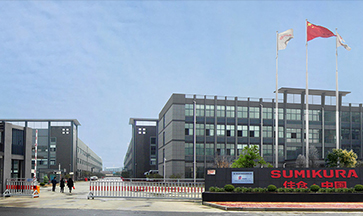
주소
265 Yixian Road, 더칭, 절강, 중국
해외 시장 :+86 572-883-2016



