
A cut-to-length (CTL) line is an industrial metal processing system that unwinds a coil of steel or aluminum, flattens it to a precise flatness standard, measures the strip to a programmed length, and shears it into flat sheets — all in a continuous, automated sequence. The term "automatic" distinguishes modern CNC-controlled systems from legacy manual-feed machines, and "precision" designates lines engineered for tight dimensional tolerances typically ±0.5 mm on length and sub-millimeter flatness deviation.
SUMIKURA Co., Ltd, headquartered in Hamamatsu, Shizuoka, Japan — with a manufacturing facility in Deqing, Zhejiang, China — specializes exclusively in cutting line technology. Their Automatic Precision Cut-to-Length Line represents the current generation of fully integrated CTL systems capable of handling coils up to 35 tons, widths up to 2,500 mm, and material thicknesses from 0.2 mm to 9.0 mm across the full range of ferrous and non-ferrous metals.
The broader SUMIKURA product ecosystem for coil processing also includes blanking lines, slitting lines, and oscillated shear lines, forming a complete suite of solutions for metal service centers and stamping facilities.
Source: sumikura.jp/automatic-precision-cut-to-length-line.html
The decoiler — also called a mandrel reel or uncoiler — is the starting point of the CTL line. It supports the heavy coil (up to 35 tons in SUMIKURA's specification) and controls the rate at which material is fed into the line. Modern decoilers use hydraulic mandrel expansion to securely grip coil inner diameters without surface damage. A dancer arm or loop pit between the decoiler and the leveler provides a material buffer that decouples the decoiler's unwind speed from the downstream feed rate, preventing tension spikes that would distort thin-gauge materials.
Coil centering is critical at this stage. Automatic edge-guided centering systems use hydraulic cylinders and edge-detection sensors to keep the strip aligned to the centerline, which is prerequisite for consistent width output downstream. For wide-format materials up to 2,500 mm, precise alignment tolerance must be maintained to within 1–2 mm across the full coil traverse.
Coiled metal retains a curvature memory (coil set) and internal residual stresses from the cold-rolling and coiling process. If not corrected before shearing, these stresses cause sheets to spring back, bow, or warp after cutting — making downstream forming and welding operations problematic. The leveler is the single most technically demanding component in the CTL line.
Precision levelers use multiple work rolls arranged in an offset pattern. The strip is alternately bent beyond its yield point in opposite directions as it passes through each work roll gap, progressively eliminating the elastic springback. The number of work rolls, roll diameter, and roll pitch are all calculated based on the material's yield strength, thickness, and width. SUMIKURA's Six-Hi Leveler technology — named for the six-roll cluster arrangement — provides additional intermediate backing roll support, enabling fine-pitch work rolls to flatten thin high-strength materials that would otherwise deflect the rolls under load.
For rapid product changeovers, the Leveler Cassette Exchange System allows the entire roll cassette to be swapped in minutes when transitioning between material grades or thicknesses, significantly improving line availability.
Accurate length measurement is the precision heart of the CTL line. Modern systems use high-resolution rotary encoders mounted directly on pinch roll shafts that contact the strip. Any slip between the encoder roll and the strip surface introduces cumulative length error — a critical concern at high speeds. Anti-slip pinch roll surface coatings (tungsten carbide or knurled steel) maintain contact without marking sensitive material surfaces.
The Belt Bridle system plays a key role in maintaining controlled strip tension between the leveler and the shear. Consistent tension ensures that the strip does not buckle between measurement rollers, which would cause length reading errors. At 80 m/min, even a 0.1-second variation in timing translates to over 130 mm of length error — so closed-loop servo control with real-time encoder feedback is non-negotiable.
The choice of shear type fundamentally defines the line's capability envelope. SUMIKURA's CTL line supports both primary shear architectures:
The strip stops momentarily as the blade descends to complete the cut. Ideal for materials above 3.0 mm thickness or when very high cut-face quality is required. Produces no dynamic shock to the stack and allows longer sheet lengths with high squareness. Trade-off: lower throughput speed due to stop-start cycle.
Rotating upper and lower blade drums cut the strip while it moves continuously at line speed. Eliminates the stop-start cycle, enabling full 80 m/min throughput for thin-gauge materials (typically ≤ 3 mm). Requires precise synchronization between blade rotation speed and strip travel speed to maintain cut squareness.
Both shear types require high-speed steel (HSS) blade materials that maintain edge hardness over thousands of cuts. Blade clearance — the gap between upper and lower blades — must be precisely set as a percentage of material thickness (typically 5–8% for mild steel) to achieve clean shear faces with minimal burr. The Oscillated Tool technology, available as an add-on, extends blade life significantly by distributing wear across the full blade width through lateral oscillation.
Edge conditioning after the shear is handled by the Edge Cropper, which trims the longitudinal edges of the strip to remove the inherently lower-quality edge zone of the hot-rolled coil. This produces sheets with all four edges at a consistent, usable quality — critical for automotive exposed panel applications.
The stacker is the final station and, in many ways, the most automation-intensive. Sheets arriving at 80 m/min must be decelerated, positioned, and stacked precisely without surface damage or misalignment. SUMIKURA offers two primary stacking technologies for its CTL line:
The Vacuum Stacker uses suction cup arrays to grip the top surface of each sheet as it exits the shear, lift it, and place it precisely on the stack. This approach is ideal for aluminum, galvanized steel, and any surface-critical material where contact marks would be unacceptable. The vacuum path is computer-controlled to synchronize with the sheet's arrival time and exit velocity.
The Magnetic Stacker uses electromagnetic or permanent-magnet arrays to handle ferrous materials. Because sheets are lifted from below without touching the upper (cosmetic) surface, this method is preferred for coated steels (galvanized, aluminized, or painted) where the coating must not be abraded. Automatic sheet counting, pallet height sensing, and pallet exchange conveyors are integrated to allow continuous operation during pallet changes.
Modern CTL lines are entirely orchestrated by a PLC (Programmable Logic Controller) system paired with an HMI (Human-Machine Interface) touchscreen. The control system manages inter-station synchronization, fault detection, and parameter storage for recipe-based production changeovers.
Length accuracy: The PLC receives real-time pulse feedback from the encoder at the feed rolls and compares accumulated pulses against the target count. When the count matches the programmed length, a synchronized shear trigger signal is issued within ±1 encoder pulse, translating to sub-millimeter positional accuracy at typical encoder resolutions of 1,000–5,000 pulses/revolution.
Speed profiling: For stop shear configurations, the PLC executes a deceleration ramp as the strip approaches the target length, stopping accurately without overrun. For rotary shear, the blade drum angular velocity is computed and matched to the line speed in real time, compensating for material elongation and belt slip.
Recipe management: Operators store material profiles (thickness, grade, target length, speed, shear clearance) as named recipes in the HMI. Changeover from one product to the next can be executed in under five minutes in lines equipped with the Cassette Exchange System and automatic blade-clearance adjustment.
A defining advantage of SUMIKURA's Automatic Precision CTL Line is its broad material compatibility. The 0.2 mm to 9.0 mm thickness range spans the entire spectrum from decorative thin-gauge aluminum foil gauge (where surface quality dominates) to structural hot-rolled steel plate (where shear force and leveling power dominate).
CTL lines generate two categories of scrap: crop ends (the first and last pieces of each coil that fall outside tolerance) and edge trim scrap (from longitudinal trimming). The Scrap Chopper automatically cuts crop ends and trim scrap into manageable pieces that fall into a collection bin, eliminating the manual handling of long, sharp metal strips that pose severe safety hazards.
Surface contamination from rolling oils and coolants is addressed by the integrated Washing Machine module. For automotive and appliance applications where downstream adhesive bonding or painting is required, residual oil contamination levels must be controlled below 100–300 mg/m² — thresholds that necessitate inline washing and drying rather than offline batch cleaning.
The automatic CTL line serves as the primary supply mechanism for flat metal blanks across the full range of metal-intensive industries:
The Cut-to-Length Lines category in SUMIKURA's product lineup covers multiple model configurations tailored to these different sector requirements, from high-mix low-volume precision lines for automotive tier suppliers to high-throughput commodity sheet lines for steel service centers.
SUMIKURA Co., Ltd is a dedicated cutting line manufacturer with dual headquarters in Hamamatsu, Shizuoka, Japan (487-3, Sanshincho, Chuoku) and a production facility in Deqing, Zhejiang, China (265 Yixian Road). The company's product portfolio covers the full spectrum of metal coil processing equipment through its Lines division and an extensive Solutions portfolio of sub-systems and accessories.
Beyond cut-to-length, SUMIKURA's related product families include the Blanking Lines for press-fed blank production, Slitting Lines for longitudinal coil splitting, and Oscillated Shear Lines for parallelogram-cut blanks used in automotive body panel stamping. This comprehensive lineup positions SUMIKURA as a complete source for metal service centers and OEM stamping facilities that require matched production technology across all coil conversion operations.
Stay informed via the SUMIKURA Industry News section, or explore Company News for the latest product and partnership announcements.
SUMIKURA engineers work with metal service centers and stamping OEMs worldwide to specify the right CTL configuration for each application. Contact the team to discuss capacity, material specifications, and integration requirements.
Get a Quote Become a Sales Agent
절단 라인 전문가!
 일본 공장
일본 공장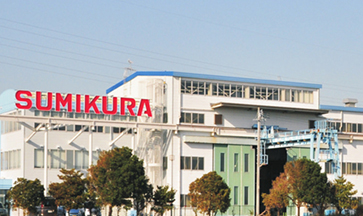
주소
487-3, Sanshincho, Chuoku, 하마마츠, 시즈오카, 일본
 일본 현지 시장 :+81 53-425-5331
중국 공장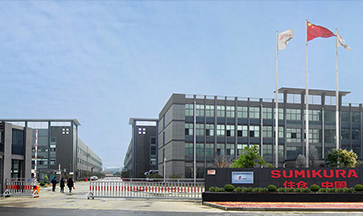
주소
265 Yixian Road, 더칭, 절강, 중국
해외 시장 :+86 572-883-2016



