
The global metal processing industry is experiencing a notable shift toward high‑precision, high‑flatness production systems, driven by increasingly strict quality requirements from key end markets such as automotive, appliances, construction, and advanced fabrication sectors. Among the most discussed topics in technical forums and industry social media are Cut‑to‑Length Lines, Stretch Leveler Production, and innovations from 6 High Leveler Manufacturer technologies — all of which are reshaping how steel and aluminum sheet products are processed and delivered to value‑adding manufacturers.
Cut‑to‑Length Lines remain a cornerstone of modern coil processing systems, designed to accurately uncoil, level, and cut metal coils into precision flat sheets with minimal internal stress and high dimensional accuracy. These integrated production lines combine automation with advanced leveling to ensure materials meet strict flatness criteria for subsequent forming or fabrication stages.
In parallel, Stretch Leveling Production technologies have gained traction in engineered coil processing solutions. Stretch levelers use controlled elongation to remove residual stress and coil set more effectively than traditional roller methods. This creates a “memory‑free” flatness that holds through laser cutting, forming, and assembly — especially important for high‑strength steels and surface critical applications.
6 High Leveler Manufacturer systems are also front and center in industry discussions. These multi‑roller leveling configurations are engineered to handle a broad range of materials (from high‑strength steels to stainless and aluminum), delivering superior flatness across wide coil widths and supporting automation with PLC and HMI touch‑screen control. Such 6‑roller setups are ideal for processing demanding materials that require uniform and repeatable sheet flatness.
What is Stretch Leveling? – A method that applies tension beyond the material’s elastic limit, permanently reducing residual stresses and eliminating coil set and other shape defects. This produces flat sheets ideal for high‑precision downstream fabrication.
What is Traditional Roller Leveling? – Uses multiple pass bends across rollers to progressively flatten the material and is highly effective for general flatness correction; however, it may not fully eliminate internal stress for ultra‑high flatness requirements.
Key Consideration: Stretch leveling is typically preferred for advanced alloys and automotive panels where residual stresses can negatively impact forming. Roller leveling remains a reliable solution for general sheet processing with robust, lower‑cost systems.
What is a 6‑High Leveler? – A configuration with six rollers arranged to optimize flattening forces and internal stress relief while handling wide and thick coils.
What are the Benefits? – 6‑High systems deliver high flatness and precise dimensional control, improving part quality for demanding applications such as automotive body panels and high‑end appliances. Such machines often feature automated control, high‑speed processing capabilities, and integration with overall CTL automation.
Automation remains a central theme in industry discussions. Today’s Cut‑to‑Length Lines increasingly integrate PLC and HMI touch systems to monitor and control every production step—from uncoiling and leveling to precision cutting and stacking. As more workflows move toward smart production, these systems offer higher consistency, reduced labor costs, enhanced safety, and real‑time process optimization.
The broader market continues to see strong demand for high‑flatness steel plates driven by:
Automotive lightweighting, where precise flatness influences crash performance and assembly outcomes.
Residential building materials production, where consistent sheet quality reduces scrap and rework.
Home appliance manufacturing, which prioritizes flat surface aesthetics and tight tolerance panels.
In addition, there’s growing buzz around advanced high‑frequency cutting technologies and line speed optimization — for example, comparing fixed‑length speeds across flying shear and rotary shear configurations in CTL systems — as manufacturers push for higher throughput without compromising quality or flatness.

절단 라인 전문가!
 일본 공장
일본 공장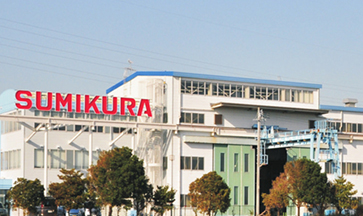
주소
487-3, Sanshincho, Chuoku, 하마마츠, 시즈오카, 일본
 일본 현지 시장 :+81 53-425-5331
중국 공장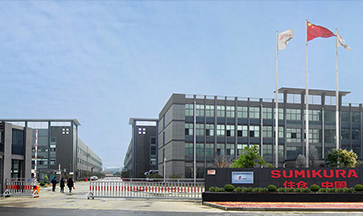
주소
265 Yixian Road, 더칭, 절강, 중국
해외 시장 :+86 572-883-2016



