
As global manufacturing accelerates toward smart factories and high-efficiency production, the Customized Steel Coil Slitter is becoming a critical piece of equipment across steel processing industries. Recent industry discussions and search trends indicate that automation, intelligent control, and modular customization are now the dominant directions shaping slitting line development.
One of the most discussed trends is the rapid adoption of fully automatic and semi-automatic steel coil slitting lines. Features such as automatic knife positioning, intelligent tension control, unmanned strip threading, and automatic recoiling significantly reduce manual intervention while improving operational safety.
In parallel, digital monitoring systems and IoT integration are gaining popularity. These systems enable real-time equipment status tracking, remote diagnostics, production data analysis, and predictive maintenance. For manufacturers, this means reduced downtime, more stable quality, and improved lifecycle management of slitting equipment.
Market demand for higher-precision steel strips continues to grow, especially in industries such as automotive, home appliances, and photovoltaic mounting systems. As a result, precision slitting technologies—such as high-accuracy tooling, closed-loop tension control, and automatic edge deviation correction—are becoming key selling points for any Customized Steel Coil Slitter.
Efficiency improvements are equally important. High-speed slitting capability, servo-driven systems, and energy-saving designs (including optimized motor control and reduced friction structures) help manufacturers lower operating costs while maintaining stable output quality.
Another major trend is the shift toward modular and customer-oriented equipment design. Modern steel coil slitting lines can be flexibly configured—from uncoilers and levelers to slitting heads, tension stations, and rewinders—based on material thickness, coil width, and production volume.
Different downstream industries have highly specific requirements:
Automotive: high-strength steel, narrow tolerances
Construction: thicker coils, high productivity
Home appliances: surface protection and burr control
Solar & energy sectors: lightweight materials with consistent strip width
This diversity makes customization no longer optional but a standard expectation.
Japanese manufacturers such as SUMIKURA Co., Ltd. are often referenced in industry discussions for their engineering-focused approach to steel slitting lines. Their solutions emphasize precision control, stable mechanical design, and tailored system configurations for different steel materials and production needs, reflecting the broader trend toward high-quality customized equipment.
A Customized Steel Coil Slitter is a slitting line designed and configured according to specific customer requirements, such as material type, coil thickness, strip width, production speed, and automation level.
Automation improves productivity, reduces labor costs, enhances safety, and ensures consistent quality. Intelligent systems also allow for real-time monitoring and predictive maintenance.
Automotive, construction, home appliances, steel service centers, solar energy, and metal fabrication industries are the primary users.
They can process carbon steel, stainless steel, galvanized steel, aluminum, high-strength steel, and other coated or specialty metals.
IoT enables remote monitoring, fault detection, production analysis, and maintenance prediction, helping manufacturers reduce downtime and optimize operations.
Key factors include material specifications, required precision, production capacity, automation level, energy consumption, after-sales service, and future upgrade potential.

절단 라인 전문가!
 일본 공장
일본 공장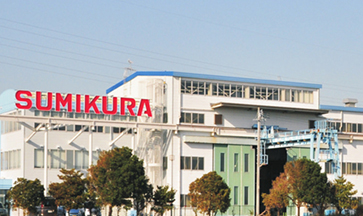
주소
487-3, Sanshincho, Chuoku, 하마마츠, 시즈오카, 일본
 일본 현지 시장 :+81 53-425-5331
중국 공장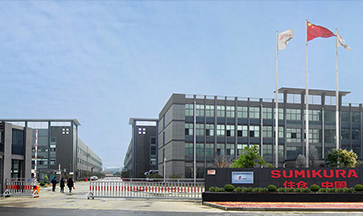
주소
265 Yixian Road, 더칭, 절강, 중국
해외 시장 :+86 572-883-2016



