
Automotive manufacturers are under continuous pressure to increase production output while maintaining tight dimensional tolerances, stable blank quality, and efficient material utilization. As vehicle production becomes more automated and lightweight materials such as high-strength steel and aluminum are used more widely, the sheet metal blanking process has become an important factor in overall manufacturing efficiency.
A High-Speed Shear Line provides a way to process metal coils into accurately sized blanks at a high production rate. Instead of repeatedly stopping the strip before every cut, continuous shear technology allows the material to keep moving while the cutting mechanism synchronizes with the strip. This approach is particularly relevant to automotive body panels, structural components, chassis parts, and other stamped sheet metal products.
For automotive manufacturers, the value of high-speed shearing is therefore not simply higher cutting speed. The more important advantages include continuous material flow, repeatable blank dimensions, reduced handling, improved material utilization, and easier integration with automated stamping production.
Automotive production requires large quantities of sheet metal blanks with highly repeatable dimensions. A small variation in blank length or geometry can affect how the material enters a stamping die, potentially influencing forming quality, springback, trimming requirements, and final part dimensions.
Traditional stop-and-go shearing requires the strip to decelerate, stop, complete the cut, and accelerate again. As production speed increases, these repeated acceleration and deceleration cycles can become a limiting factor.
A continuous High-Speed Shear Line addresses this problem by maintaining material movement during the cutting operation. The cutting mechanism follows the strip motion during the shear stroke, allowing the line to maintain a more stable production rhythm.
This is particularly useful when processing automotive-grade steel and aluminum, where manufacturers must balance production speed with flatness, dimensional accuracy, surface protection, and cutting quality.
Another consideration is material utilization. Automotive components are not always rectangular. If a blank requires an angled or trapezoidal geometry, cutting only rectangular sheets first can create unnecessary scrap. A shear line capable of producing non-rectangular blanks can use the coil width more efficiently.
A High-Speed Shear Line is an integrated coil-processing system that converts a continuous metal coil into individual blanks through a sequence of feeding, leveling, cutting, conveying, and stacking operations.
A typical line can include a decoiler, leveler, feeding or tension-control equipment, shear unit, conveyor, and automatic stacking system. Depending on the application, additional equipment such as edge cropping, oiling, washing, laminating, or scrap processing can also be integrated.
The basic process is:
Coil → Decoiling → Leveling → Feeding → Continuous Shearing → Conveying → Stacking
The major difference between conventional stop shearing and rotary oscillated shearing is the movement relationship between the sheet and the cutting tool.
In conventional shearing, the strip generally needs to stop before the blade completes the cut. In a rotary oscillated system, the cutting tool moves with the sheet during the cutting cycle and then returns for the next cut while the strip continues forward.
This continuous-motion principle is the key reason why rotary oscillated technology is suitable for high-throughput coil-to-blank processing. SUMIKURA describes its Rotary Oscillated Shear as a continuous cutting system designed for high-speed operation, with configurations reaching up to 80 m/min.
The process begins when the metal coil is loaded onto the decoiler. The strip is then released at a controlled rate and passes through a leveling section.
Leveling is important because coil material naturally contains residual curvature, edge wave, center buckle, or other shape deviations. If these conditions are not corrected before cutting, the actual blank geometry may differ from the programmed dimensions.
After leveling, the strip enters the feeding and shear section. An encoder and servo-controlled feeding system can continuously measure material movement and coordinate the cutting cycle with the required blank length.
The critical technical principle is synchronization.
The cutting tool must match the linear velocity of the moving strip during the actual shear stroke. In a Rotary Oscillated Shear system, the tool rotates and oscillates in coordination with the material, performs the cut, and then returns to its starting position without requiring the strip to stop.
This creates a continuous sequence:
Measure → Synchronize → Shear → Reset → Repeat
The finished blanks are then transferred to the downstream conveyor and stacking system. Depending on material and production requirements, magnetic or vacuum stacking technologies can be used.
The main advantage of continuous shearing is that productivity is no longer directly limited by the repeated stop-and-start cycle of conventional cutting.
When the strip continues moving, the line can maintain a more consistent production rhythm. This is particularly valuable for automotive plants where thousands of blanks may be required for a single production program.
Continuous shearing can provide several operational advantages:
Higher throughput for mass production
Reduced stop-and-start movement
More consistent cutting cycles
Lower mechanical shock during cutting
Reduced unnecessary material handling
Easier integration with automated downstream processes
SUMIKURA's published specifications indicate line speeds of up to 80 m/min, with material thickness capabilities of approximately 0.2–4.0 mm on one configuration. The available material range includes HSS, CRS, HRS, and aluminum. Actual production speed, however, depends on material properties, blank dimensions, line configuration, cutting frequency, and other process conditions.
The Rotary Oscillated Shear (ROS) is the core technology that allows continuous cutting without stopping the strip.
Instead of using a blade that simply moves vertically against a stationary sheet, the ROS mechanism coordinates rotational and oscillating movement with the moving strip. During cutting, the tool follows the material direction sufficiently to complete the shear while the strip continues feeding.
This motion has two important consequences.
First, it reduces the idle time associated with stopping the material before every cut. Second, it allows the cutting angle to be changed so that non-rectangular blanks can be produced.
For automotive applications, this is significant because blank geometry directly affects material utilization and downstream forming. A trapezoidal blank, for example, may fit the required forming geometry more efficiently than a rectangular blank.
SUMIKURA's Oscillated Tool is designed for sheet-metal shearing and can produce rectangular and trapezoidal shapes. The tool is integrated with the cutting system, while the finished blanks can be transferred through telescopic and magnetic conveyor arrangements toward stacking equipment.
The published SUMIKURA configurations include oscillation-angle ranges of up to 0–35°, providing additional flexibility for angled blank production.
A conventional cut-to-length process is naturally suited to rectangular blanks. Automotive manufacturing, however, often requires more complicated blank geometries.
Depending on the cutting system and programmed angle, a high-speed oscillated shear line can produce:
Rectangular blanks
Trapezoidal blanks
Angled blanks
Parallelogram-type blanks
The practical advantage is that blank geometry can be designed around the downstream stamping process instead of forcing every component to begin with a simple rectangle.
For example, an angled blank can reduce unused material around the perimeter of a formed component. The result can be higher material yield and lower scrap generation, especially when expensive high-strength steel or aluminum is being processed.
SUMIKURA specifies oscillated shear systems with adjustable oscillation angles and identifies rectangular and trapezoidal blank production as key applications of its Oscillated Tool technology.
Material utilization is one of the most important cost factors in automotive sheet metal processing.
If a component requires a trapezoidal shape but is produced from a rectangular blank, the unused corner areas become scrap. When thousands of blanks are produced, even a small percentage of additional scrap can represent a significant material cost.
A rotary oscillated shear allows the cutting angle to be coordinated with the required blank geometry. Instead of removing large areas after rectangular cutting, manufacturers can create a closer-to-net blank before stamping.
The material-saving mechanism can therefore be understood as:
Better blank geometry → Less unused material → Higher coil utilization → Lower scrap cost
This does not mean every automotive component should use angled cutting. The optimum solution depends on the part geometry, stamping die, coil width, nesting strategy, material grade, and required blank tolerance.
For high-value materials such as advanced high-strength steels and aluminum, however, improving material yield can be an important part of the overall return on investment.
Automotive coil-processing requirements vary considerably depending on the vehicle platform and component.
Common materials include:
Cold-rolled steel (CRS)
Hot-rolled steel (HRS)
High-strength steel (HSS)
Advanced high-strength steel (AHSS), subject to machine and tooling specifications
Aluminum sheet
SUMIKURA's published Oscillated Shear Line specifications list HSS, CRS, HRS, and aluminum among compatible materials. One configuration covers thicknesses from 0.2 to 4.0 mm, while another is specified for approximately 0.4 to 3.0 mm.
When selecting a line for AHSS or other high-strength grades, buyers should not evaluate material compatibility based on thickness alone. Yield strength, tensile strength, hardness, strip width, surface condition, cutting frequency, blade clearance, and required edge quality can all influence the appropriate machine configuration.
For aluminum, surface protection and stacking are also important because the material is lighter and more susceptible to surface marking during conveying and stacking.
High line speed does not automatically mean high accuracy. The critical engineering challenge is maintaining dimensional control while the material is continuously moving.
Blank accuracy depends on several interconnected factors:
Leveling accuracy: The strip must be sufficiently flat before entering the cutting section.
Feeding stability: Servo-controlled feeding must maintain consistent strip velocity.
Length measurement: Encoder feedback and control algorithms must accurately track material travel.
Shear synchronization: The cutting tool must reach the correct position at the correct moment.
Tool condition: Blade clearance and cutting-edge condition directly influence cut quality and burr formation.
In continuous rotary shearing, the cutting mechanism synchronizes its movement with the strip. SUMIKURA states that its ROS system is designed to maintain synchronized cutting while the sheet continues moving, supporting high-speed production without conventional stop-and-go operation.
For automotive stamping, dimensional accuracy matters because the blank is the starting geometry for the forming operation. Errors introduced during blanking can propagate into subsequent forming and trimming processes.
Automation turns a shear machine into a complete production system rather than an isolated cutting device.
A modern automotive High-Speed Shear Line can use PLC and HMI control to manage feeding, length setting, shear synchronization, conveyor operation, and stacking. Production recipes can be prepared for different materials and blank specifications, allowing operators to switch between jobs with less manual adjustment.
Automation also helps reduce operator intervention. Instead of manually measuring every blank and moving finished sheets between machines, the system can automatically coordinate:
Coil feeding → Leveling → Length control → Shearing → Conveying → Stacking
SUMIKURA states that its oscillated shear systems support automatic length setting and tool-change functions, while also allowing integration with high-speed levelers, automatic stackers, laminating systems, dust-removal systems, and oiling equipment.
For automotive plants, this integration is particularly valuable because the shear line can become part of a larger automated material-flow system.
The benefits extend beyond simply increasing cutting speed.
A properly engineered High-Speed Shear Line can improve production in several areas:
Higher throughput: Continuous cutting allows more material to be processed within a given production period.
Dimensional consistency: Servo feeding and synchronized shearing support repeatable blank lengths.
Lower material waste: Angled and trapezoidal blank production can improve material utilization.
Reduced labor requirements: Automatic feeding, conveying, and stacking reduce manual handling.
Shorter changeover: Automated settings and tool-management functions can reduce adjustment time.
Better automation compatibility: Continuous blank production can be connected directly to downstream material-handling and stamping operations.
Lower mechanical impact: Smooth cutting motion can reduce shock and vibration compared with abrupt stop-and-cut cycles. SUMIKURA specifically identifies reduced mechanical shock, lower wear, and continuous production as advantages of its rotary oscillating technology.
The actual economic benefit should always be calculated using production volume, material cost, scrap rate, operating speed, labor requirements, maintenance cost, and downstream stamping capacity.
Choosing a High-Speed Shear Line should start with the production requirements rather than the nominal machine speed.
Important parameters include:
Material: Define whether the line will process CRS, HRS, HSS, AHSS, aluminum, or multiple grades.
Thickness: Establish the minimum and maximum material thickness.
Coil width: Confirm the maximum coil width and required usable width.
Coil weight: The decoiler and upstream material-handling system must accommodate the actual coil weight.
Line speed: Calculate the required output based on blank length, production quantity, and downstream stamping capacity.
Blank geometry: Determine whether production requires rectangular, trapezoidal, or angled blanks.
Accuracy: Define required length tolerance, squareness, flatness, and edge quality.
Leveling: Select an appropriate leveling system based on material strength and flatness requirements.
Stacking: Choose magnetic or vacuum stacking according to material characteristics and blank dimensions.
Automation: Consider PLC/HMI control, recipe management, automatic tool setting, conveyor integration, and production data requirements.
Future capacity: A line should not only satisfy today's production volume. It should also provide sufficient flexibility for new materials, blank sizes, and future vehicle programs.
For example, SUMIKURA publishes one oscillated shear configuration for widths up to 2,500 mm, thicknesses of 0.2–4.0 mm, and speeds up to 80 m/min, while another configuration covers widths of 400–1,850 mm and blank lengths of 500–4,000 mm. These figures illustrate why the machine should be selected according to the actual production envelope rather than a single headline specification.
SUMIKURA Co., Ltd. is a specialized coil-processing line manufacturer headquartered in Hamamatsu, Japan. The company states that it was founded in 1947 and develops equipment including blanking lines, Oscillated Shear Lines, cut-to-length lines, rotary shear lines, and slitting lines.
For automotive sheet metal processing, SUMIKURA's main technical advantage is its focus on integrating rotary oscillated shearing with the complete coil-processing workflow.
Its Rotary Oscillated Shear technology enables continuous cutting while the sheet remains in motion. The system supports both standard and angled blank production, while the available line configurations are designed around different material widths, thickness ranges, cutting angles, and production requirements.
The company also provides supporting technologies such as Oscillated Tools, Six-Hi Levelers, Belt Bridles, Edge Croppers, Magnetic Stackers, Vacuum Stackers, and other coil-processing equipment, allowing customers to configure a more complete automated sheet-processing solution.
For automotive manufacturers evaluating a High-Speed Shear Line, this system-level approach is important. Cutting speed alone cannot determine production performance. The decoiler, leveler, feeding system, shear, conveyor, stacking system, controls, and downstream stamping process must work as one coordinated production line.
A High-Speed Shear Line is an automated coil-processing system that continuously feeds sheet metal through leveling, feeding, shearing, conveying, and stacking operations. Rotary oscillated shear technology allows the strip to remain in motion during cutting.
The maximum speed depends on the machine configuration, material, thickness, blank length, cutting geometry, and production requirements. SUMIKURA currently specifies speeds of up to 80 m/min for its Oscillated Shear Lines.
Yes, provided the machine and tooling are designed for the specific grade and thickness. SUMIKURA lists HSS among the compatible materials for its Oscillated Shear Lines. For AHSS, the actual material strength and thickness should be confirmed during technical specification.
Yes. SUMIKURA lists aluminum among the materials supported by one of its Oscillated Shear Line configurations. Aluminum processing should also consider surface protection, conveying, and stacking requirements.
Conventional stop shearing normally requires the strip to stop before cutting. Rotary oscillated shearing synchronizes the cutting tool with the moving strip, allowing continuous material movement and higher production efficiency.
Yes. Rotary oscillated shear technology can change the cutting angle to produce non-rectangular blanks. SUMIKURA's Oscillated Tool is specifically described as capable of producing rectangular and trapezoidal sheet-metal shapes.
It can reduce waste by producing blanks that more closely match the required component geometry. Trapezoidal and angled cutting can reduce the unused corner areas that occur when non-rectangular components are cut from conventional rectangular blanks.
The key factors are material grade, thickness, coil width, coil weight, required line speed, blank dimensions, cutting geometry, accuracy, leveling requirements, stacking method, automation level, and integration with downstream stamping equipment.

절단 라인 전문가!
 일본 공장
일본 공장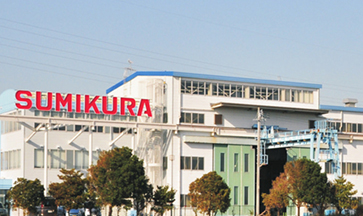
주소
487-3, Sanshincho, Chuoku, 하마마츠, 시즈오카, 일본
 일본 현지 시장 :+81 53-425-5331
중국 공장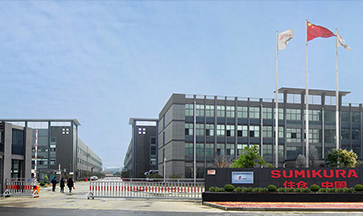
주소
265 Yixian Road, 더칭, 절강, 중국
해외 시장 :+86 572-883-2016



