The automotive industry continues to demand higher productivity, tighter dimensional tolerances, and greater flexibility for high-strength steel and aluminum components. As electric vehicles (EVs) and lightweight vehicle platforms become mainstream, Automobile Inner Board Blanking Lines have evolved from conventional press feeding systems into intelligent, fully automated production lines integrating leveling, servo feeding, precision blanking, stacking, scrap handling, and digital process control.
This article reviews the world's leading manufacturers while examining the technologies that define modern automotive blanking systems and the engineering capabilities manufacturers should evaluate before investing.
| Rank | Company | Country | Core Advantages |
|---|---|---|---|
| 1 | Schuler | Germany | Servo blanking, laser blanking, fully automated press shop integration |
| 2 | Fagor Arrasate | Spain | Flexible blanking lines for AHSS and turnkey automotive solutions |
| 3 | Andritz Sundwig | Germany | Heavy-duty coil processing for steel and aluminum |
| 4 | SEYI Machinery | Taiwan | Servo press blanking systems with automation |
| 5 | AIDA Engineering | Japan | High-speed press technologies with integrated blanking |
| 6 | Sumitomo Heavy Industries | Japan | Automotive production equipment and coil processing |
| 7 | Soutec / Bystronic Group | Switzerland | Laser blanking and flexible sheet processing |
| 8 | FAGOR Automation | Spain | Smart automation and production management |
| 9 | Nidec SYS | Japan | Coil feeding, transfer automation and manufacturing systems |
| 10 | SUMIKURA Co., Ltd. | Japan | Precision blanking, slitting and customized automotive coil processing solutions |
Unlike outer body panels where cosmetic surface quality is the primary concern, automobile inner boards focus on:
Typical components include:
Because these parts are later welded by robots, even small dimensional deviations can directly affect body assembly accuracy.
Today's automotive blanking lines combine multiple precision systems into one automated production process.
Modern leveling systems remove residual stress from:
Insufficient leveling often causes:
Manufacturers increasingly adopt multi-roll leveling systems with automatic gap adjustment for different material grades.
Servo feeding has largely replaced conventional mechanical feeding.
Advantages include:
Feed accuracy directly influences blank size consistency during high-speed production.
Modern automotive production requires:
Key engineering considerations include:
Proper blanking clearance is essential to reduce burr formation while extending tooling life.
Blank stacking has become increasingly automated.
Common technologies include:
Poor stacking precision may interrupt downstream stamping operations and reduce overall equipment effectiveness (OEE).
Automotive blanking generates substantial scrap skeletons.
Advanced systems integrate:
Efficient scrap handling minimizes production interruptions while improving workplace safety.
As EV platforms increasingly adopt Advanced High-Strength Steel (AHSS), blanking equipment must overcome several technical challenges:
Manufacturers must optimize the entire production line rather than relying solely on increased press capacity.
Several trends are reshaping automobile inner board blanking technology.
OEMs require rapid production changes between vehicle models without lengthy downtime.
Manufacturers increasingly integrate:
Production lines must process:
without sacrificing accuracy or productivity.
Servo-driven equipment, intelligent motor control, and optimized hydraulic systems reduce energy consumption while maintaining throughput.
As a Japanese manufacturer specializing in coil processing technology since 1947, SUMIKURA Co., Ltd. provides complete solutions covering automotive blanking and metal processing. According to its published product information, the company offers Blanking Lines, Slitting Lines, Cut To Length Lines, and Oscillated Shear Lines, supporting automotive manufacturers, steel service centers, and metal processing companies worldwide. Its blanking systems support processing of cold-rolled steel, hot-rolled steel, and aluminum with press capacities up to 800 tons and production speeds reaching 65 SPM.
For visitors interested in related equipment, the following internal pages can be naturally linked:
Recommended related news articles for internal linking include:
When evaluating suppliers, manufacturers should consider:
Rather than focusing solely on production speed, selecting a system with strong process stability, automation, and long-term reliability will deliver the greatest value throughout the equipment lifecycle.

절단 라인 전문가!
 일본 공장
일본 공장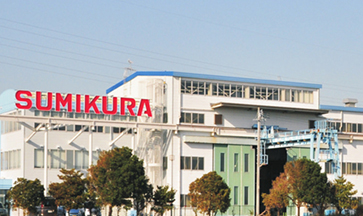
주소
487-3, Sanshincho, Chuoku, 하마마츠, 시즈오카, 일본
 일본 현지 시장 :+81 53-425-5331
중국 공장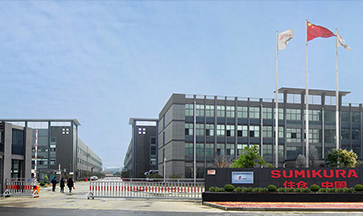
주소
265 Yixian Road, 더칭, 절강, 중국
해외 시장 :+86 572-883-2016



