
As the global sheet metal processing equipment market surges toward $61.8 billion by 2032, Sumikura's advanced Oscillated Shear Line platform raises the bar on cutting precision, throughput, and intelligent automation—reshaping the economics of coil-to-sheet operations worldwide.
The global cold-rolled and flat-steel processing sector is undergoing a structural transformation. Steelmakers and service centers across Asia, Europe, and the Americas are under mounting pressure to deliver tighter dimensional tolerances, faster changeovers, and leaner operating footprints—all while managing volatile raw-material costs and a shrinking pool of skilled machine operators. In this environment, the Oscillated Shear Line has risen from a specialist niche product to a cornerstone technology of high-efficiency coil processing.
Unlike conventional rotary or guillotine shear lines that stack sheet in simple piles, an oscillated shear system interleaves successive blanks in a fan-like offset pattern as they exit the cutting station. The result is a compact, warp-free stack that maximises pallet utilisation, eliminates sheet-to-sheet scratching, and dramatically reduces downstream handling time. For silicon steel, tinplate, electro-galvanised, and precision cold-rolled substrates—materials whose surfaces are easily damaged and whose dimensional conformity is non-negotiable—the oscillated approach is increasingly considered the only viable solution.
Japan-based Sumikura, a specialist in precision cold-rolled steel processing machinery, has positioned its Oscillated Shear Line as the flagship product for service centers processing strip widths up to 1,650 mm and thicknesses from 0.15 mm to 3.2 mm. With over four decades of engineering refinement, the platform integrates high-speed servo drives, closed-loop CNC length control, and proprietary stacking kinematics into a production line capable of sustaining line speeds up to 120 m/min while holding cut-length tolerances within ±0.3 mm across the full operating range.
The market backdrop is unmistakably favourable. According to Fortune Business Insights, the global sheet metal processing equipment market was valued at $33.68 billion in 2024 and is projected to reach $61.78 billion by 2032, expanding at a compound annual growth rate of 8.2 percent. Asia-Pacific led with a 51.6 percent regional share, driven by Chinese, Japanese, South Korean, and Indian steelmakers expanding their downstream value-added processing capacity. Meanwhile, IndexBox's 2025 analysis of the sheet metal shears sub-segment projects a separate CAGR of 3.8 percent through 2035 as industrial modernisation accelerates across emerging markets.
Automotive remains the dominant demand vector, commanding 41 percent of the application segment in 2024, as OEMs and tier-one stampers require ever-greater consistency in blank geometry for body panels, door inners, and battery enclosures. Electric-vehicle production—demanding high-grade electrical steels for motor cores—has become a particularly powerful secondary driver, with APAC accounting for 64 percent of EV-related flat-steel processing growth.
At the same time, labour scarcity is forcing processors to automate functions once performed by human hands: manual stack alignment, sheet inspection, rejection handling, and recipe setup. This dual pressure—higher quality standards combined with fewer available operators—has made fully automated shear lines with integrated smart controls a capital expenditure priority across the industry tier.
Conventional square stacking causes sheet surfaces to contact each other at identical points with every cycle—accelerating abrasion on high-gloss, coated, or silicon-steel surfaces. Oscillated offset stacking distributes contact stress across a wider area, protecting critical surface finishes that command premium pricing.
At the heart of any oscillated shear line is the shear head itself. Sumikura's design employs a servo-driven upper blade assembly that executes a synchronised oscillation—a lateral displacement of the cut sheet as it is sheared—while maintaining a blade gap tolerance measured in hundredths of a millimetre. Blade clearance is a critical variable: too wide, and the cut edge rolls over; too tight, and tool wear accelerates exponentially. Sumikura's CNC blade-gap adjustment system allows operators to dial in the clearance remotely via the human-machine interface (HMI), eliminating the manual shimming procedures that historically demanded specialist maintenance personnel and line downtime measured in hours.
The line architecture begins with a heavy-gauge uncoiler capable of accommodating coil weights up to 30 tonnes—appropriate for the wide, heavy coils characteristic of automotive-grade cold-rolled or galvannealed steels. A precision servo-driven straightener follows, deploying multi-roll configurations to eliminate coil set, crossbow, and edge wave before the strip enters the measurement and feed section. Cut-length measurement is performed by a high-resolution encoder-coupled pinch roll, with real-time correction applied dynamically to compensate for material creep and thermal expansion—a subtle but significant source of dimensional scatter in high-speed production.
The stacker module is arguably where the Sumikura design earns its commercial differentiation. Twin-belt transport accelerates the cut sheet away from the shear faster than the line speed, creating a gap between successive blanks. The oscillation arm—servo-controlled for both angle and stroke—deflects alternate sheets to one of two stacking positions, building a neatly offset pile. Stack height sensors feed back to the control system, triggering automatic pallet transfer when the programmed sheet count or height is reached. The entire stacking cycle, from cut to stack, is completed within a single machine pitch, sustaining the rated line speed without manual intervention.
Sumikura's latest generation of Oscillated Shear Lines integrates a proprietary CNC controller architecture built on an industrial PC platform with a touch-screen HMI in multiple languages. The recipe management system stores complete production parameters—material grade, coil width, target length, blade gap, stacker pitch, production quantity—as retrievable job files. A changeover from one grade to another involves loading a saved recipe and confirming the parameters; the machine sets all adjustable axes automatically. In practical terms, this compresses changeover time from the industry average of 25–40 minutes to under eight minutes, a transformation that meaningfully increases the number of productive production orders a line can complete per shift.
"Automation in sheet metal processing is no longer optional—it is the primary mechanism through which service centers compete on quality, delivery speed, and cost."
EuroBLECH 2024 Speaker Forum, Hannover — October 2024Network connectivity is an increasingly standard expectation. Sumikura's control platform supports OPC-UA and Ethernet/IP protocols, enabling integration with plant-level Manufacturing Execution Systems (MES) and enterprise resource planning (ERP) software. Production counts, downtime events, blade wear cycles, and alarm logs are transmitted in real time to supervisory dashboards, providing management with the data granularity needed for predictive maintenance scheduling and overall equipment effectiveness (OEE) tracking. In an era when Industry 4.0 is transitioning from conference-room aspiration to shopfloor reality, this connectivity backbone is a competitive prerequisite rather than a premium option.
Edge-computing modules embedded in the control cabinet run self-monitoring algorithms that track servo load signatures, hydraulic pressure trends, and vibration spectra from critical bearings. Deviations from baseline are flagged as early-warning maintenance alerts before they escalate to unplanned stoppages—a capability that dramatically reduces the mean time to repair (MTTR) and extends component service life. For service centers operating 24/7 across two or three shifts, eliminating a single unplanned breakdown per month can recover tens of thousands of dollars in lost throughput.
Motor-core and transformer-core lamination producers represent the most demanding oscillated shear application. Grain-oriented electrical steel (GOES) at 0.23–0.35 mm thick requires burr heights below 20 μm and surface gloss retention above 95% after processing—specifications that only an oscillated, servo-controlled system can reliably meet in volume production.
The following technical specification table consolidates the principal operating parameters for Sumikura's Oscillated Shear Line series. The platform is offered in multiple width configurations (nominal 1,250 mm, 1,500 mm, and 1,650 mm coil-width capacity) to suit service-center, automotive stamping-plant, and electrical-steel processor applications respectively.
All tolerance values are guaranteed under standard production conditions with certified material and correctly maintained blade geometry. Extended-range options—including wider strip, heavier coils, and higher-tensile substrates—are available as engineered-to-order configurations.
Buyers are encouraged to consult Sumikura's application engineering team for process-specific qualification runs, particularly when processing silicon steel at sub-0.30 mm gauge or advanced high-strength steel (AHSS) grades above 800 MPa tensile strength, where blade material selection and clearance optimisation require custom validation.
For the full product specification and quotation request, visit the Sumikura Oscillated Shear Line product page.
| Parameter | Standard Range | High-Performance Option | Unit |
|---|---|---|---|
| Strip Thickness | 0.15 – 3.2 | 0.10 – 3.5 | mm |
| Strip Width | 500 – 1,650 | up to 2,000 | mm |
| Cut Length | 500 – 4,000 | 500 – 6,000 | mm |
| Line Speed (max) | 100 | 120 | m/min |
| Cut-Length Tolerance | ±0.5 | ±0.3 | mm |
| Squareness Tolerance | 0.5 / 1,000 | 0.3 / 1,000 | mm/mm |
| Coil Inner Diameter | 508 / 610 | 508 / 610 | mm |
| Coil Outer Diameter | 800 – 2,000 | up to 2,200 | mm |
| Max Coil Weight | 20,000 | 30,000 | kg |
| Stack Height (max) | 500 | 600 | mm |
| Stacker Positions | 2 (standard oscillated) | 3 (tri-stack option) | — |
| Blade Gap Adjustment | Manual/CNC | Full CNC servo | — |
| Control Platform | PLC + touch HMI | CNC-IPC + OPC-UA | — |
| Recipe Storage | 500 programs | Unlimited (cloud) | — |
| Material Grades | Cold-rolled, silicon steel, tinplate, galvanised, AHSS, aluminium strip | — | |
The 27th International Sheet Metal Working Technology Exhibition, EuroBLECH 2024, held at the Hannover Exhibition Grounds from 22 to 25 October 2024, set attendance and exhibitor records and confirmed the direction of travel for the entire sector. Organised under the motto "The Power of Productivity," the event filled nine exhibition halls across more than 90,000 square metres. Over 60 percent of exhibitors came from outside Germany, underscoring the increasingly global character of steel processing equipment supply chains.
The dominant themes—automation, digitisation, sustainability, and artificial intelligence—aligned precisely with the capability roadmap that leading oscillated shear line manufacturers have pursued. AI-powered self-learning algorithms that identify production bottlenecks and auto-adjust process parameters in real time, edge-computing platforms for in-process quality monitoring, and robot-integrated handling cells for blanks and pallet management all featured prominently on exhibitor stands. Fraunhofer ILT presented an AI-assisted process monitoring system specifically designed for cold-rolled product processing, demonstrating the convergence of laboratory-grade sensing with shopfloor-grade robustness.
Guided visitor tours on automation and robotics drew significant crowds, confirming that buyers are no longer evaluating standalone machines but complete connected systems. For oscillated shear line suppliers, this creates both a challenge and an opportunity: the machine itself must perform flawlessly, but it is the surrounding data ecosystem—connectivity, OEE analytics, predictive maintenance—that increasingly determines purchasing decisions.
The global market for oscillated and rotary shear lines is served by a concentrated group of specialists, primarily based in Japan, Germany, Italy, Taiwan, and China. Japanese manufacturers—among them Sumikura, as well as Hengli CNC Technology (China) and several European OEMs—compete on precision, reliability, and after-sales service, particularly for demanding silicon-steel and tinplate applications where scrap rates directly erode thin margins.
German-origin equipment manufacturers such as those within the Schuler and Kaltenbach ecosystems tend to focus on heavier-gauge structural applications, while Italian makers target the automotive blanking segment. Taiwanese and Chinese suppliers have made significant inroads in the mid-market, offering cost-competitive platforms for less demanding cold-rolled substrates. Against this backdrop, Japanese manufacturers differentiate on cutting-edge servo precision, blade longevity, and the ability to guarantee tolerance conformity on sub-0.3 mm silicon steel—a capability that remains difficult to replicate without deep metallurgical and mechatronic know-how.
Sumikura's installed base of more than 400 lines operating globally is a credible signal of field-proven reliability. For risk-averse procurement committees at major steel service centers, a supplier's reference list—particularly in demanding markets such as South Korea, Japan, and Germany—carries decisive weight against lower-priced alternatives with limited track records.
Asia-Pacific (51.6% share): Japan, South Korea, China, India — driven by automotive stamping, EV motor cores, appliance steels. Europe (24%): Germany, Italy, Turkey — driven by premium automotive and construction. Americas (15%): USA, Mexico, Brazil — automotive AHSS and service center upgrades.
No single trend has done more to elevate the technical requirements for oscillated shear lines than the electrification of the global vehicle fleet. EV motor cores require precisely dimensioned laminations of grain-oriented or non-oriented electrical steel, typically 0.23 mm to 0.50 mm thick, with burr heights below 20 micrometres and no surface coating damage that would impair the interlayer insulation critical for electromagnetic efficiency.
Processing these materials at commercially viable throughputs—150 sheets per minute and above—demands shear systems with sub-millisecond blade actuation control, actively compensated feed systems, and stacking mechanisms that can separate and offset ultrathin sheets without inducing warp or edge damage. It is precisely this technical ceiling that separates top-tier servo-driven oscillated shear lines from conventional equipment.
Knauf Interfer Cold Rolling GmbH, one of Europe's specialist cold-rolled strip producers, has publicly attributed improved downstream processing productivity to the deployment of oscillated wound coil technology—reducing handling time and set-up cycles in further processing. The logic extends directly to the service-center blanking step: oscillated stacking mirrors the advantages of oscillated winding by minimising relative surface motion between sheets in the stack.

절단 라인 전문가!
 일본 공장
일본 공장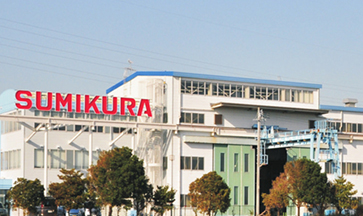
주소
487-3, Sanshincho, Chuoku, 하마마츠, 시즈오카, 일본
 일본 현지 시장 :+81 53-425-5331
중국 공장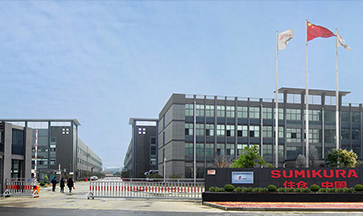
주소
265 Yixian Road, 더칭, 절강, 중국
해외 시장 :+86 572-883-2016



