
When purchasing or upgrading a metal sheet blanking machine, the stakes are high. A wrong specification can lead to poor blank quality, excessive scrap, unplanned downtime, and costly rework. Whether you are sourcing for automotive body panel production, a steel service center, or a high-volume stamping facility, knowing what truly differentiates a capable blanking line from a mediocre one can save you years of frustration and millions in operational losses.
This guide breaks down the seven most critical technical features to evaluate — and explains the engineering principles behind each one.
The first and arguably most overlooked step in any blanking line is coil leveling. Steel and aluminum coils arrive wound under tension, which introduces internal residual stresses, coil set (longitudinal curvature), crossbow (transverse curvature), and edge wave defects. If these are not corrected before the material enters the press, your blanks will bow, spring back inconsistently in the die, and fail dimensional checks downstream.
What to look for: A high-performance blanking line should incorporate a multi-roll precision leveler — ideally a 6-Hi (Six-High) leveler configuration. This cassette-type arrangement uses working rolls, intermediate rolls, and backup rolls acting together to apply a controlled bending cycle that progressively eliminates internal stress. The pressing-down amount should be digitally adjustable to 0.01 mm resolution and readable via a touch screen display, so operators can fine-tune flatness without guesswork. The upper frame of the leveler should support both fast-speed and slow-speed elevation switching, allowing quick setup and accurate repositioning during roll changes.
For demanding applications such as automotive outer panels — where Class A surface quality is non-negotiable — the leveler must handle materials from 0.2 mm to 4.0 mm in thickness and widths up to 2,300 mm without leaving roller marks. Cassette-type levelers with quick-exchange systems dramatically reduce changeover time when switching between material grades or gauges, which is critical in mixed-production environments.
Industry relevance: Automotive OEMs and Tier-1 suppliers processing advanced high-strength steels (AHSS) or aluminum alloys require flatness tolerances within ±0.5 mm/m or tighter. Any leveling system that cannot achieve and sustain these tolerances under continuous production will create compounding quality issues throughout the stamping process.
Press capacity is the single number most buyers focus on — yet it is also the most misunderstood. Tonnage alone does not define suitability. The relationship between press capacity, die area, material thickness, tensile strength, and cutting perimeter length determines whether the press can deliver clean, burr-free cuts or will struggle and wear prematurely.
What to look for: For general automotive sheet blanking, press capacities ranging from 400 to 800 tons are standard. High-end lines achieve up to 800 tons with maximum blank dimensions of 5,200 × 2,750 mm, enabling the production of large door outer panels, hood inners, roof blanks, and floor panels in a single stroke. The press bed size is as important as the tonnage: a wide bed accommodates large progressive or transfer dies without requiring die modification.
Press rigidity — the stiffness of the frame under load — is equally critical. A press with insufficient rigidity will deflect under full tonnage, causing non-uniform die closure across the blank length and resulting in variable burr height or partial cutting at the edges. Look for four-point guided press rams with tight angular clearance to ensure perpendicular die engagement across the entire stroke.
For thin materials (0.2 to 1.0 mm), the press control system must also manage pneumatic counterbalance and bottom dead center (BDC) accuracy, as even a fraction of a millimeter of variation in stroke bottom position affects cut quality on delicate gauges.
Industry relevance: Service centers handling coil-to-blank operations for mixed clients need press lines with adjustable stroke lengths and speeds, so the same machine can handle both thin aluminum for EV battery enclosures and thicker hot-rolled steel for structural reinforcements.
A blanking line that levels and presses perfectly but feeds inaccurately produces nothing but scrap. Feeding accuracy directly controls blank length tolerance — the difference between a blank that passes incoming inspection and one that is rejected at the stamping press or causes tool damage.
What to look for: The feed system should be servo-driven, with closed-loop encoder feedback that monitors actual material advance rather than relying on open-loop step counts. Leading lines achieve feeding accuracy of ±0.1 mm or better per stroke, verified by linear encoder measurement on the material itself rather than at the drive shaft.
The feeder must also handle varying coil tensions without allowing material slack or over-tension, which would alter the feed length. Belt bridle systems positioned between the leveler and the press serve this purpose — they decouple tension variations in the loop from the precision feed zone, ensuring consistent material presentation at the die regardless of coil diameter changes during payoff.
For oscillated blanking (producing parallelogram, trapezoidal, or irregular-shaped blanks to optimize nesting and reduce scrap), the feed system must coordinate X-axis advancement with Y-axis lateral shift of the oscillated cutting tool, requiring synchronized multi-axis servo control with sub-millimeter repeatability.
Industry relevance: In automotive blank production, a feeding error of ±0.5 mm on a door panel blank translates directly to inconsistent panel gaps, poor fit-up in the body shop, and potential warranty claims. Stamping lines running at 65 SPM accumulate errors extremely quickly without tight feeding control.
Productivity in blanking is measured in strokes per minute (SPM). But raw speed is meaningless if it comes at the cost of cut quality or mechanical reliability. The goal is achieving maximum throughput while maintaining burr-free edges, consistent blank geometry, and sustainable die life.
What to look for: Best-in-class automotive blanking lines operate at up to 65 SPM for standard cold-rolled steel (CRS) and hot-rolled steel (HRS). The speed must be adjustable based on material type and thickness — running aluminum at the same SPM as thick HRS without damaging the surface or creating excessive die wear requires independent speed profiling per material recipe.
The cutting mechanism — whether a straight-edge die for rectangular blanks or an oscillated tool for shaped blanks — must be engineered for low-impact engagement at high speed. Oscillated cutting tools that move laterally during the cutting stroke allow the press to operate at reduced tonnage by engaging the material progressively rather than simultaneously across the full perimeter, which both extends die life and reduces machine vibration at high SPM.
Scrap management is another speed-limiting factor often overlooked during machine selection. If scrap chopper capacity and conveyor throughput cannot keep pace with the cutting speed, the line must be throttled, negating the investment in high-speed mechanical systems. Integrated scrap choppers and high-speed evacuation conveyors are essential companions to any fast blanking line.
Industry relevance: A difference of 10 SPM between competing machines, running two shifts per day at 250 production days per year, translates to hundreds of thousands of additional blanks annually. Over a five-to-ten-year machine life, cutting speed selection has a direct and compounding impact on total cost of ownership.
Modern metal sheet blanking machines are no longer standalone mechanical systems operated by manual setups and manual stacking. The degree of automation built into the line determines how quickly you can switch between jobs, how consistently the line produces, how few operators are required, and how much production data you can capture for quality and efficiency tracking.
What to look for: A fully automated blanking line should cover: automatic coil car loading and coil decoiling, automatic threading of the strip through the leveler and feed system, automatic blank length and width setting via stored production recipes, automatic die or cassette exchange (for leveler cassettes and slitter heads), and automatic blank stacking via magnetic or vacuum stacker systems.
Magnetic stacking systems are standard for ferrous materials, using electromagnets to lift and transfer ferrous blanks without surface contact on the top face. Vacuum stacker systems extend this capability to non-ferrous materials like aluminum, using suction cups that grip the blank surface without scratching. High-end lines offer both systems in one machine, enabling production of both steel and aluminum blanks without major reconfiguration.
The control architecture should support recipe-based production management, where all parameters — feed length, press speed, stacker arm positions, leveler roll gap — are stored and recalled by part number. This eliminates operator-dependent setup variation and reduces changeover time from hours to minutes.
Industry relevance: For automotive OEMs running just-in-time (JIT) production, the ability to switch between five or more blank types per shift without quality deviation is a production-critical requirement. Automation is not a luxury — it is the mechanism that makes flexible, high-mix blanking economically viable.
The range of materials a blanking line can reliably process defines its strategic value to your operation. A machine optimized only for cold-rolled mild steel will become a liability as automotive lightweighting trends push increasing volumes of aluminum, high-strength steel, and advanced high-strength steel through production lines.
What to look for: The most capable blanking lines handle cold-rolled steel (CRS), hot-rolled steel (HRS), and aluminum across a thickness range of 0.2 mm to 3.0 mm, with widths from 300 mm to 2,080 mm. Material handling for each type requires different considerations:
Cold-rolled steel is the baseline — predictable leveling behavior, compatible with magnetic stacking, moderate surface sensitivity. Hot-rolled steel introduces scale, greater thickness variation within the coil, and higher yield strength, requiring more robust leveler roll profiles and higher press tonnage. Aluminum requires non-contact stacking (vacuum systems), softer roll materials in the leveler to prevent marking, and reduced leveling intensity to avoid work-hardening the surface. Advanced high-strength steels (AHSS) and dual-phase (DP) steels demand higher leveling force per millimeter of material, servo-driven feed systems with higher torque ratings, and cutting dies designed for elevated tensile strengths above 600 MPa.
The machine's rated specifications should explicitly confirm compatibility with each material grade your production roadmap requires — not just current grades, but materials you expect to process within the machine's service life.
Industry relevance: The automotive industry's shift to mixed-material body structures — combining aluminum hoods with steel door inners on the same platform — means blanking lines must be genuinely multi-material capable, not just theoretically so. Verify this with reference customers running similar material combinations.
Even the most precisely engineered metal sheet blanking machine will eventually require maintenance, spare parts, software support, or technical intervention. The supplier's service infrastructure — and their long-term commitment to it — should be a primary selection criterion, not an afterthought evaluated after purchase.
What to look for: Evaluate service support across three phases. Before purchase, the supplier should conduct a detailed demand analysis of your production requirements, propose an equipment configuration matched to your material types and production volumes, and provide workshop layout planning. During installation, on-site commissioning by factory engineers and hands-on operator training are standard expectations — not optional extras. After handover, round-the-clock technical support availability, a global engineer service network for on-site response, and scheduled preventive maintenance programs are the markers of a supplier committed to the operational success of their installed base.
Spare parts availability and lead time is a practical concern that is easy to underestimate. A blanking line running at 65 SPM in a JIT automotive supply chain cannot wait three months for a replacement servo drive or leveler roll set. Confirm that the supplier maintains critical spare parts in regional warehouses and has documented mean-time-to-repair commitments for major component failures.
Remote diagnostics capability — the ability for factory engineers to access machine PLCs and drive systems remotely to diagnose and often resolve faults without a site visit — is increasingly standard on modern lines and dramatically reduces downtime duration when issues occur.
Industry relevance: The total cost of ownership of a blanking line includes not just capital cost and operating cost, but the cost of unplanned downtime. A machine with average specifications but outstanding service support will typically deliver better long-term ROI than a technically superior machine supported by a supplier with poor after-sales infrastructure.
Selecting a metal sheet blanking machine is a long-term engineering and business decision. The seven features covered in this article — leveling precision, press capacity, feeding accuracy, cutting speed, automation level, material compatibility, and service support — are interdependent. A weakness in any one of them will constrain the performance of the others.
SUMIKURA Co., Ltd., headquartered in Hamamatsu, Shizuoka, Japan, with manufacturing operations in Deqing, Zhejiang, China, engineers automotive-grade press blanking lines that integrate all seven of these capabilities into cohesive, production-tested systems. Their lines have been supplied to major automotive manufacturers and Tier-1 suppliers, including installations for Shougang, DFAC, and Geely, demonstrating proven performance at industrial scale.
For buyers evaluating blanking line investments, technical specifications are the starting point — but factory audits, reference site visits, and honest conversations with the supplier's engineering team about your specific production requirements are what ultimately determine whether a machine becomes a competitive asset or a production bottleneck.

절단 라인 전문가!
 일본 공장
일본 공장
주소
487-3, Sanshincho, Chuoku, 하마마츠, 시즈오카, 일본
 일본 현지 시장 :+81 53-425-5331
중국 공장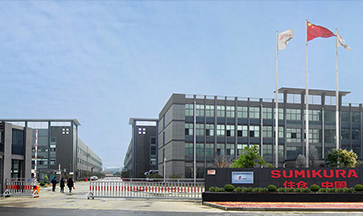
주소
265 Yixian Road, 더칭, 절강, 중국
해외 시장 :+86 572-883-2016



